





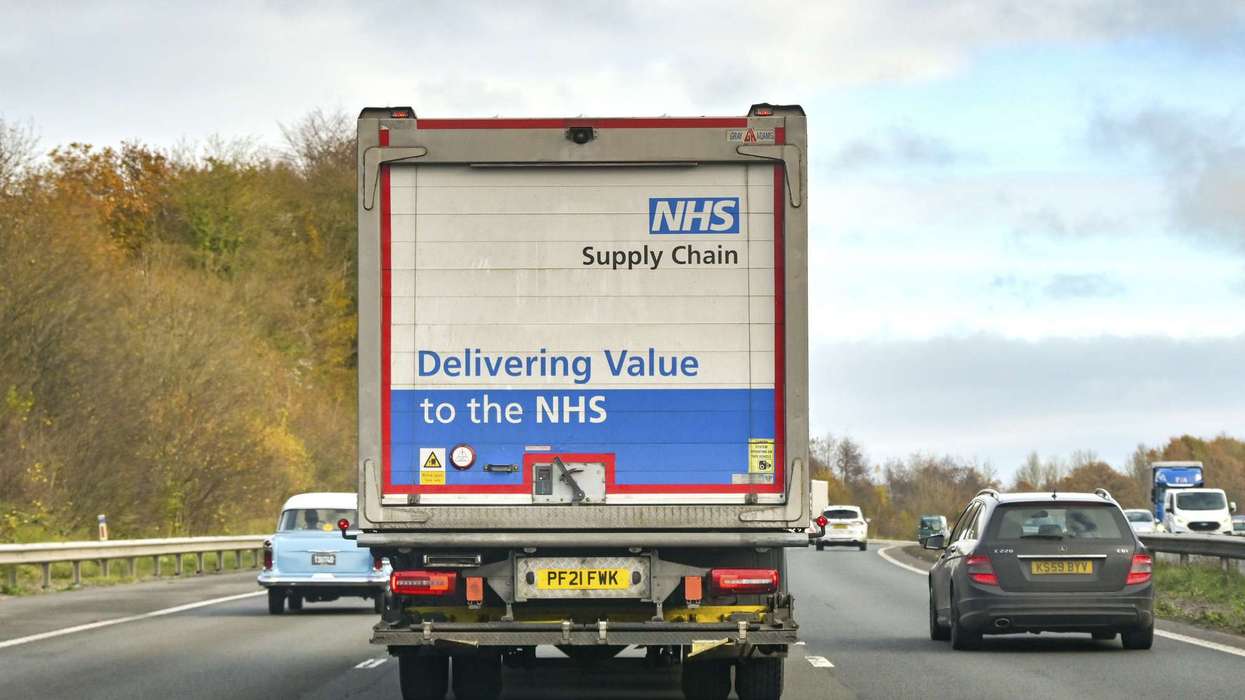

NHS lorry drivers supplying medical equipment to hospitals across England have decided to strike over pay, according to the trade union Unite.
They had rejected a four per cent offer from GXO, which runs the NHS supply chain contract for Supply Chain Coordination Limited (SCCL), which is wholly owned by NHS England.
Nearly 200 drivers employed by GXO will strike from 13 to 15 October, 20 to 22 October, 27 to 29 October, 3 to 5 November and 10 to 12 November.
Drivers based in depots at Alfreton in Derbyshire, Bridgwater in Somerset, Normanton in West Yorkshire, Maidstone in Kent, Rugby in Warwickshire, Bury St Edmonds in Suffolk and Washington in Newcastle will take part in the strike action.
They drive vehicles delivering general equipment such as bandages, dressings, gowns, gloves and needles to all the hospitals in England.
Unite general secretary Sharon Graham has accused the GXO of threatening to remove the original offer it made. "Let me be clear – our members will not be threatened into backing down. They have Unite’s 100 per cent support in striking for a fair pay rise.”
Unite regional officer Phil Silkstone said: “The responsibility for any disruption lies with GXO and SCCL and ultimately NHS England for making threats and refusing to put forward a reasonable offer. There is still time for strike action to be avoided but that will require a deal our members can accept.”
A GXO spokesperson said: “We are disappointed that Unite members working on the NHS Supply Chain contract have voted in favour of industrial action.
"We remain committed to constructive discussions with Unite representatives and ACAS and continue to believe that the pay offer presented is fair, competitive and sustainable. Our priority remains supporting our colleagues and maintaining open and constructive dialogue as we seek a resolution.
“We have robust contingency plans in place and are working closely with NHS Supply Chain and other relevant stakeholders to minimise any disruption and maintain continuity of service. Patient care remains of paramount importance, and we remain focused on providing a safe and effective operation throughout this period."