





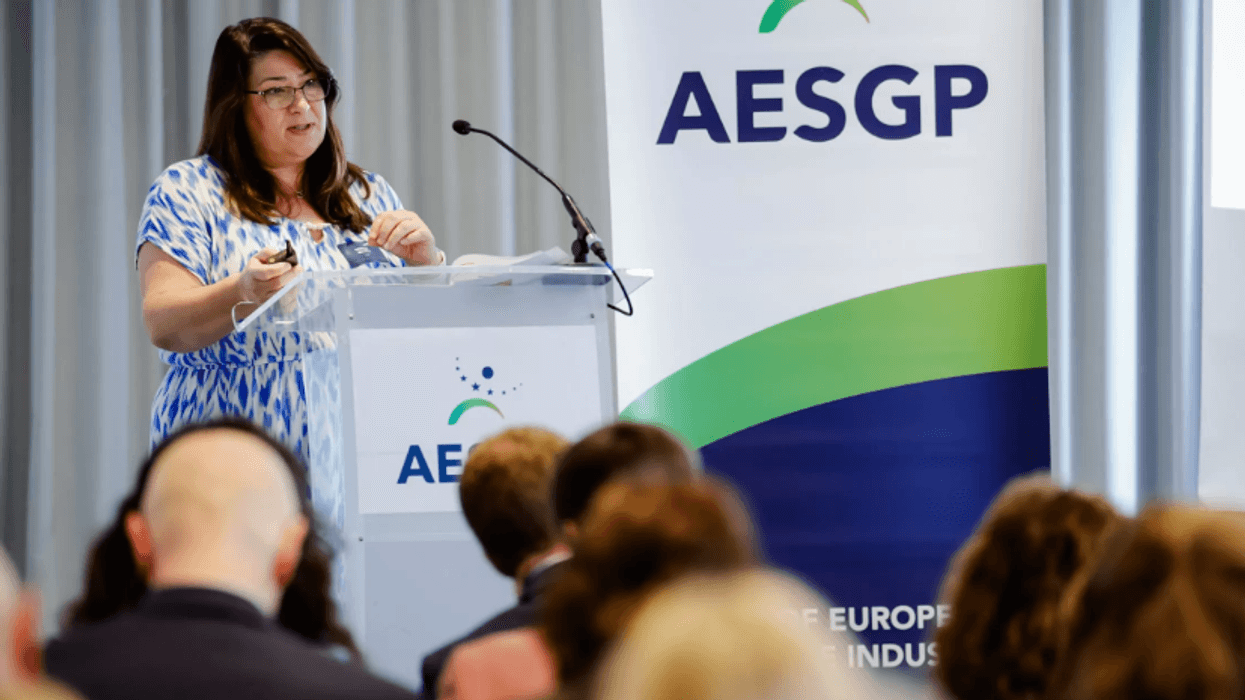

PAGB has highlighted the need for a modernised regulatory framework for pharmacy reclassification at AESGP Switch Day 2026. The association argued that updated regulations should support self-care and enable self-administered injectable medicines to be considered for reclassification.
The conference, held in Brussels on 7 October, brought together European regulators, policymakers, healthcare professionals, and industry representatives to discuss prescription-to-non-prescription switch pathways and the evolving role of self-care.
AESGP Switch Day is a dedicated pharmaceutical regulatory conference organised by the AESGP (Association of the European Self-Care Industry). It focuses specifically on prescription-to-non-prescription medicines reclassification-commonly referred to in the industry as an "Rx-to-OTC switch".
In her presentation, PAGB’s CEO Michelle Riddalls shared perspectives on advancing reclassification in the UK and exploring opportunities to improve access to medicines, support self-care and encourage innovation.
Michelle said: “I was delighted to speak at AESGP Switch Day and share perspectives on advancing reclassification in the UK. Reclassification plays an important role in improving access to medicines and supporting self-care.”
During her presentation, Michelle highlighted the importance of evidence, impact, collaboration and ambition in supporting future reclassifications. She explored how reclassification can improve access to medicines and support self-care, while emphasising the importance of collaboration between government, regulators, industry and pharmacy organisations.
Her presentation also considered opportunities to reinvigorate the reclassification agenda, including greater international collaboration and regulatory approaches that support future switch activity.
Michelle added: “Healthcare has changed dramatically over the last few decades, but the legislation governing medicines classification has not kept pace. Self-administered injectable medicines are becoming increasingly common, yet under the current rules they cannot even be considered for reclassification in the UK, regardless of any evidence supporting their safe use. The underlying legislation was developed in a very different era, with the current UK prescription criteria dating back to 1968.
“The reality is that healthcare, technology and patient capability have changed significantly. The regulatory framework now needs to evolve to reflect that change and create the opportunity for companies to pursue these types of reclassifications.
“That is why PAGB is calling for changes to medicines legislation, including the criteria that determine prescription-only medicine status, so that self-administered injectable medicines can be considered for pharmacy reclassification, where supported by evidence. This is not about lowering standards or creating an automatic route to pharmacy availability. All applications would still need to undergo the same rigorous MHRA assessment and demonstrate that the benefits clearly outweigh the risks.”
“By removing this legislative barrier, we have an opportunity to unlock one of the most significant advances in medicines reclassification for a generation, opening the door to a new wave of pharmacy medicine innovation and helping more people to self-care and access appropriate treatments through community pharmacy.”
The event also provided an opportunity for PAGB and international stakeholders to share experiences and explore how regulation, innovation and evidence can support the future development of non-prescription medicines.