






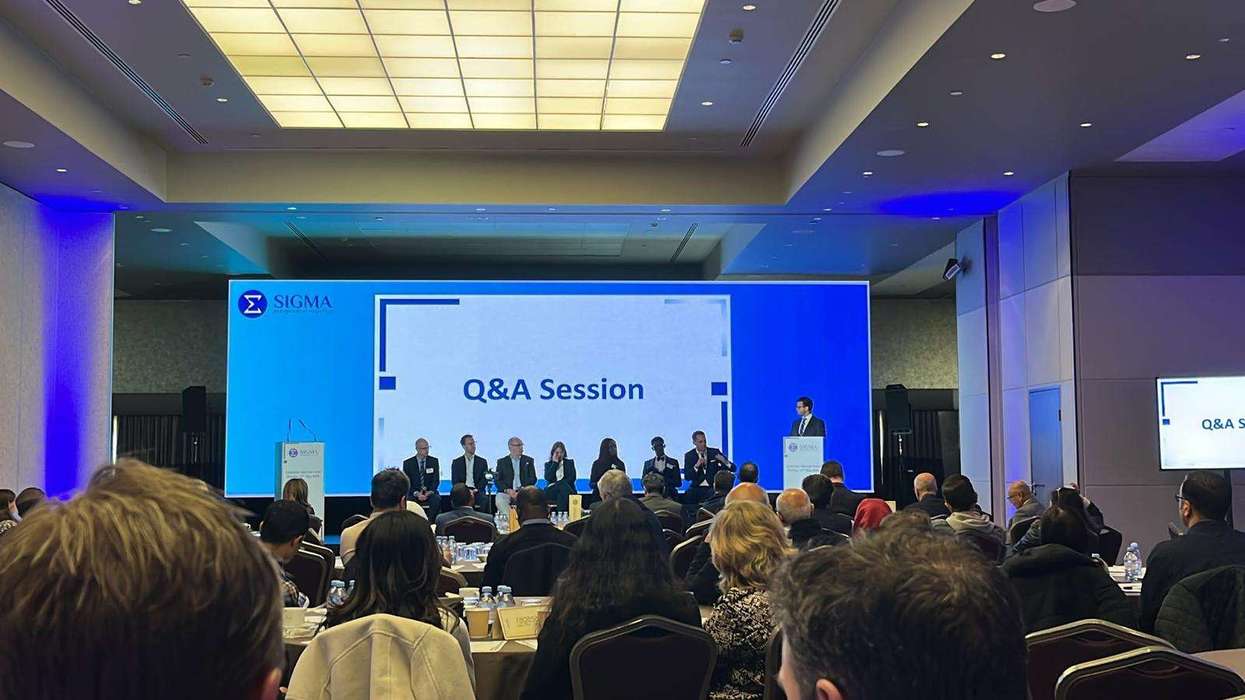

An expert panel of speakers at the Sigma conference in Leicester (17 May) considered how community pharmacy teams can shift to offering more clinical services, and why this is important for pharmacies as businesses.
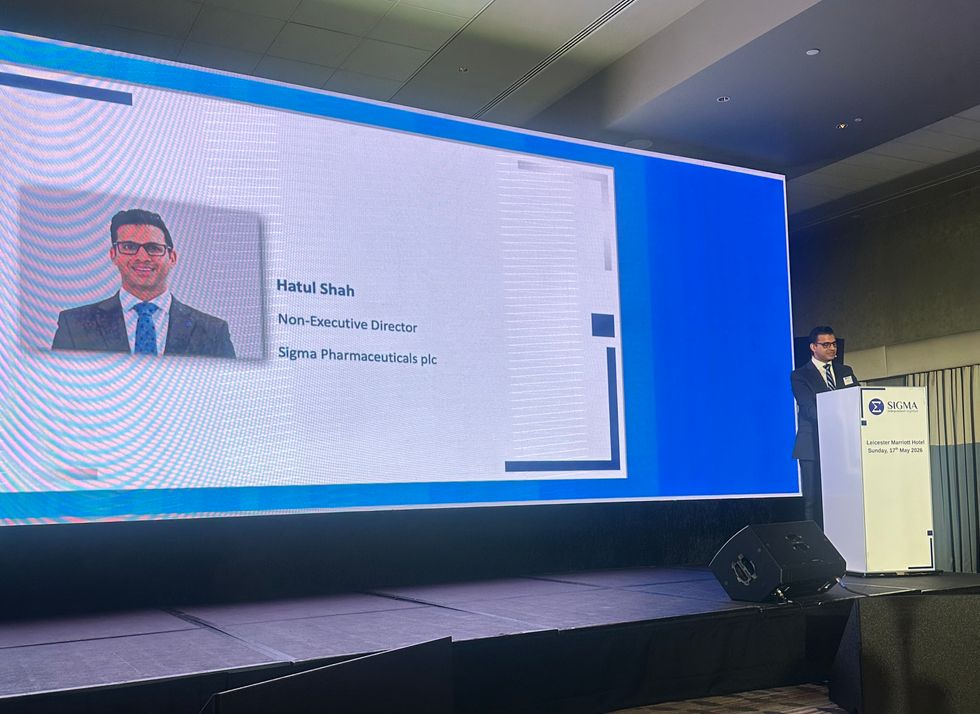
Many pharmacy owners are still effectively subsidising NHS care from their own balance sheet, the Sigma conference heard from Sigma’s non executive director and pharmacy contractor Hatul Shah. “That's not a sustainable model for frontline part of primary care,” he told delegates.
 Sigma Conference
Taking questions from the audience, the panel considered the need to grow NHS and private clinical services in pharmacy to be able to maximise revenue opportunities and meet growing patient need for private services, with less time spent on dispensing.
Should pharmacies be focusing on maximising NHS services before embarking on growing private services, asked Shah?
Olivier Picard, chair of the National Pharmacy Association, said that while he had successfully grown revenue from private clinical services in his own pharmacy, NHS services have continued to be an important area of focus:
“I'm going to try and make the best out of NHS services.
“They [patients] know we're there because we're offering NHS services, and I think we need to also realise that a lot of the NHS services that exist today on the back of private services, so at the same time we need to embrace both. I don’t think you should do one or the other. I think you need to do both.
“My advice to you is focus on your NHS core business, but don't ignore private services.”
New pharmacists joining the profession as independent prescribers will also want to be involved in offering services, he commented.
Mindset change
Does taking the step to actively grow clinical services require a change in perspective?
Dupe Akomolafe, GP and director of Christchurch Pharmacy in Braintree, said:
“We've got to do something different, and if we want to save our businesses; our pharmacies, then we've got to do something different.’
And, she said, when patients are asking for new services, “we need to be there to provide them”.
Having a change of mindset towards clinical services is now key for contractors, said Baba Akomolafe, pharmacist and director of Christchurch Pharmacy.
Speaking about recently buying a new pharmacy and looking at things differently with the team, he advised on having a clear direction and purpose.
“You're changing your model. You can't change your model until you change the mission. You can't change the mission until you change the mindset.’
His team, he said, are clear that salaries are no longer paid by their dispensing activity. ‘It's clear, so every time you've done dispensing, you haven't done any work! All of you are breathing right now. Nobody claps you for breathing.’
Making the move to more clinical services, comes directly from the top. “It's the mindset first, and then you, as an owner, need to be convinced that you need to go clinical, and then you take your team with you, and that's what leadership is.”
Only one way to go
Fin McCaul, North West Regional Representative for Community Pharmacy England, said that with funding, workload pressures and other factors as they are, the time for making changes is now.
“It’s here; it’s not the future. Continuing to work in the same way in a diminishing market, would only produce the same results, or a poorer result.
“The only one way to go is down.”
Be clear about a plan, he said. “Find support and mentorship, know your numbers; know where you want to be and what you want to do for your business, and mark out how you're going to do that.”
Picard added: “I think I think you've got to take the team on board. If you think you're going to be doing it alone by staying till midnight, it's not going to happen. You need to invest in your team, you need, you need to train your team.”
McCaul reminded delegates to investigate ways of streamlining their dispensing processes, saying: “The pharmacist that you're employing is your number one expense in there. If they're spending all day labelling or checking, you can’t move forward.”
“Fundamentally, this is about creating capacity for you as the pharmacist to lead the team.’ The best way to do that, in my experience, is with your PMR.”
Making a strong case for pharmacy
The panel also discussed a question asking why community pharmacy had perhaps not had a strong history of making its case to Department of Health.
Claire Ward, Mayor of East Midlands and chair of East Midlands Combined County Authority and a past Member of Parliament, said that continuing to make the case to MPs and civil servants collectively as a profession was important, “because otherwise what they will do is what they've always done, which is divide and rule”.
She also suggested that pharmacy had to get support from local government, as well as more broadly from within healthcare.
Henry Gregg, chief executive at the National Pharmacy Association, said that having a clear and combined view from across pharmacy was vital.
He reflected on how he had heard GP representatives at a meeting with the minister for primary care, for example, consistently talk ‘from exactly the same hymn sheet’. “It just gives them a really clear view,” he said.
Community pharmacy would benefit from agreeing on the main points that everyone wants to get across, he said. “I think if we could get to that page of three or four main points that we want to put to government that we all agree on, and we put the rest aside, and we just concentrate on that.”
McCaul suggested that shifts in the NHS mean that the pharmacy model also needs to evolve rapidly.
“We have huge expectations as contractors that the NHS is going to pay us for everything we do. We think the NHS is free at the point of service. It is not. We need to change, as well as the NHS changing.”
He added that he thought pharmacy was actually doing a good job at “presenting the best case”.
Pharmacy businesses will also benefit from working closely together locally, rather than only operating as competitors, he said.
“I think we need an honest conversation amongst ourselves as contractors as well. We still have high streets with five pharmacies within a 10-minute walk. We're not working collaboratively; we're working in competition with each other.
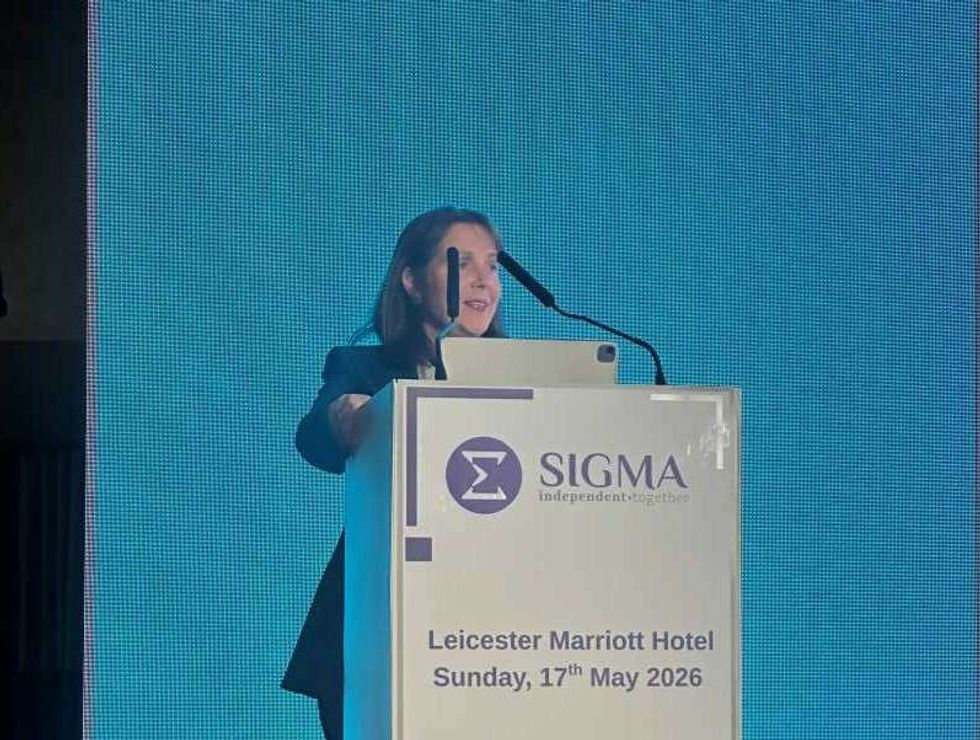 Claire Ward speaking at the event. Sigma Conference
Taking care of the wider determinants of health
With health impacted by a range of factors, such as housing and the environment, local and regional leaders outside of the health service have a key role.
Claire Ward, Mayor of East Midlands and chair of East Midlands Combined County Authority, spoke about her responsibilities and the opportunities for her to bring about change through devolved budgets.
‘It's a role that's given me a chance to act on many of the things that this sector and the practitioners care about healthy lives are not delivered, as you well know, solely by doctors, nurses, and other healthcare professionals in acute settings.
“Indeed, far from it, the wider determinants of health, good homes, good work, a good environment, and a good community are actually responsible for around 80% of the outcomes that people experience.
“I want and think Mayors will play a much stronger role in leading the health system, given that I'll be held accountable for those health outcomes, but also because I believe that Mayors are a catalyst to help unlock our collective capacity to invest consistently into the wider determinants of health, like housing, transport, and clean air.”
Government has already declared two pilot projects on health with Mayors, one in Greater Manchester and one in South Yorkshire, where they work closely with ICBs, and something that she expects to also be involved with in the future.
As a past leader in the pharmacy sector, she said she also expects to continue to be working closely with community pharmacy.
“As Mayor, I'm excited that the idea that community pharmacy and health provision more widely could be used as an anchor for rejuvenating our high street.”
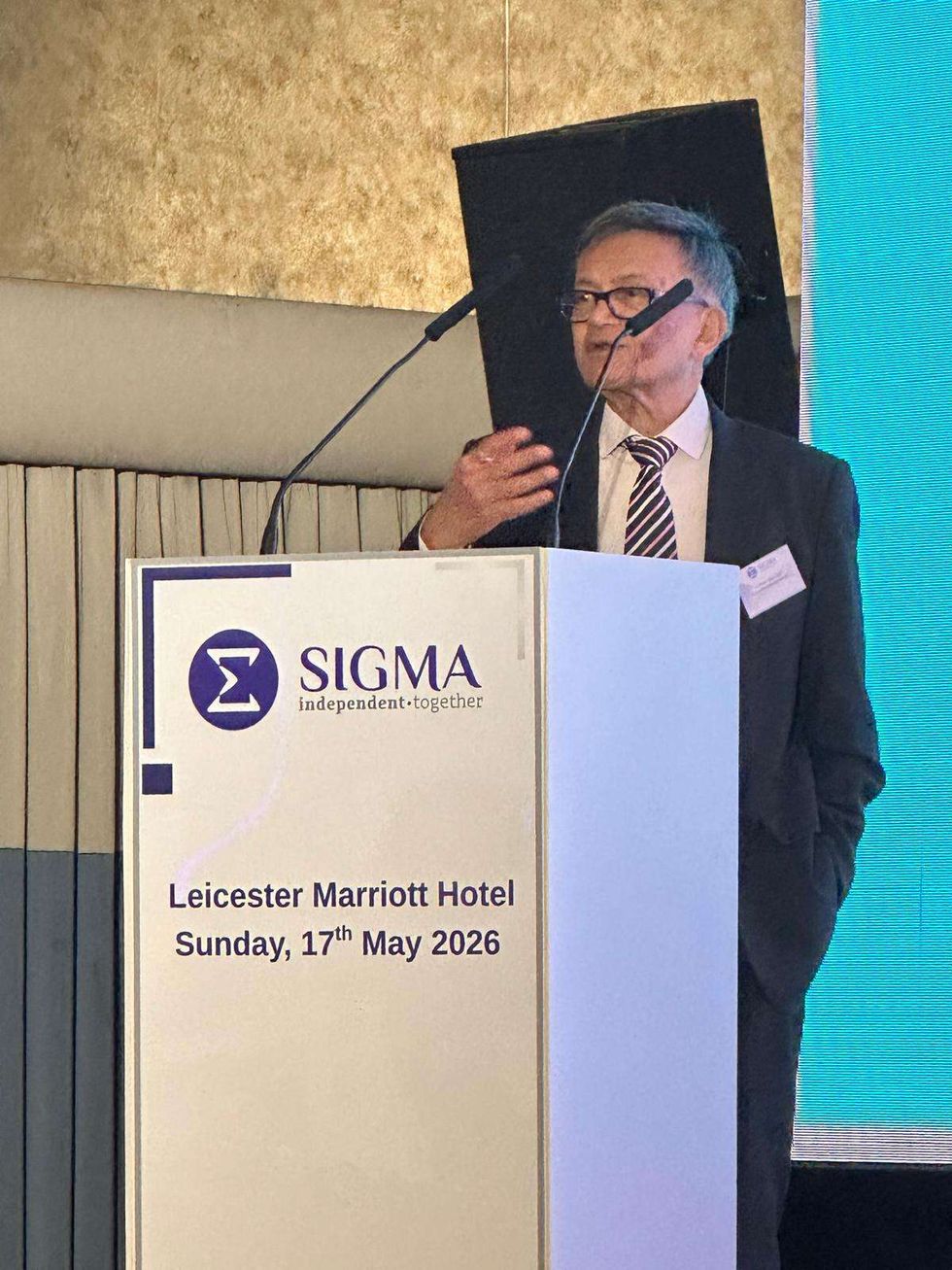 Dr Bharat Shah welcomed delegates to the Sigma conference in Leicester, the first of its type run by the company outside of London. Sigma Conference