







Community pharmacy is progressing at pace down the path for the provision of clinical services, both NHS and private.
Increasingly, those services utilise independent prescribing where the professional risk lies with the pharmacist within their nominated areas of practice.
It is therefore critical that the planning and delivery of all services are underpinned by excellent clinical governance. This will protect the pharmacy, pharmacy professionals and patients.
Clinical governance has been defined as:
A framework through which organisations are accountable for continually improving the quality of their services and safeguarding high standards of care by creating an environment in which excellence in clinical care will flourish.
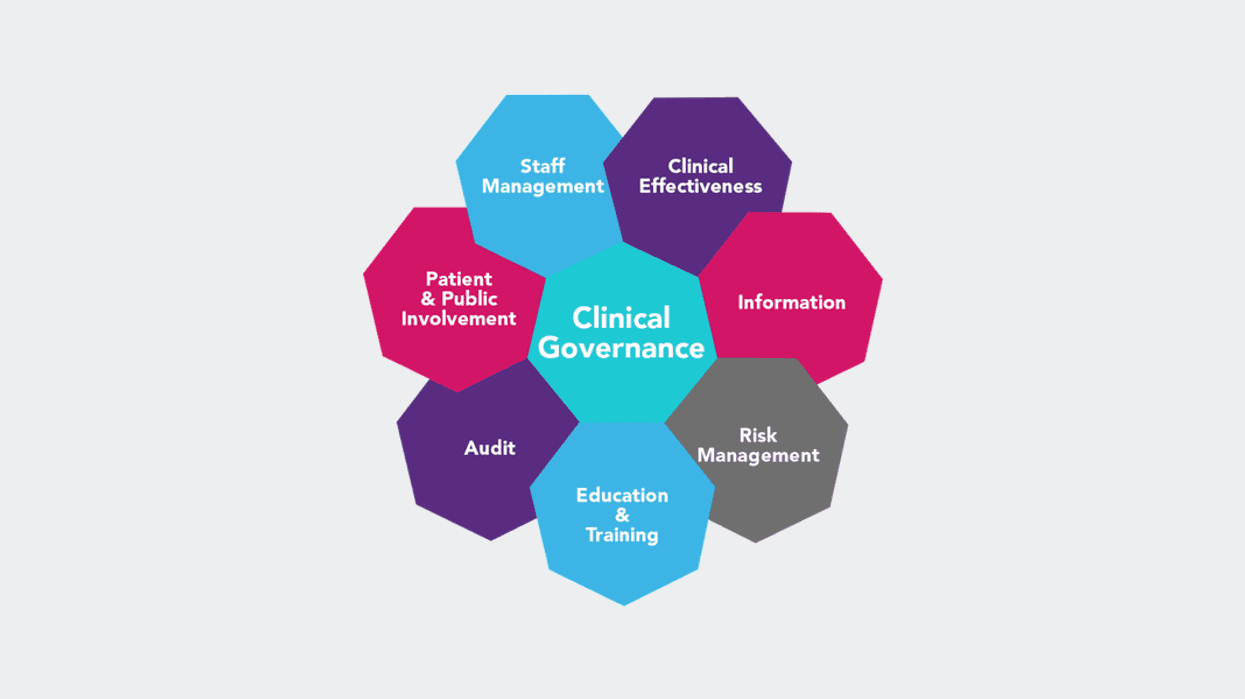
It is commonly referred to as having seven pillars, sometimes under the mnemonic PIRATES:
The seven pillars (PIRATES):
P – Patient and public involvement
I – Information and IT
R – Risk management
A – Audit
T – Training and education
E – Effectiveness
S – Staff management
You might expect more clarity on these key elements in documents such as NHS service specifications or regulatory standards and guidance, but this is not always so.
For example, the recently updated Hypertension Case Finding Service specification1 mentions ‘complying with an acceptable system of clinical governance’ without defining what acceptable is.
The GPhC’s Standards for Pharmacy Professionals2, now nine years old, does not mention the word ‘governance’, although surprisingly, the Standards for Registered Pharmacies3, last revised in 2018, does include it in Principle 1 where it states:
‘Governance arrangements’ includes having clear definitions of the roles and accountabilities of the people involved in providing and managing pharmacy services. It also includes the arrangements for managing risks, and the way the registered pharmacy is managed and operated.
Given that pharmacists and pharmacy technicians will be held to account for maintaining an acceptable standard of governance, might we expect more accessible clarity on expectations for general pharmaceutical care and for each service commissioned?
Practising pharmacy professionals must understand each of those seven pillars, and what must be in place to ensure safety for all.
- Patient and public involvement – engaging patients and the public in the planning, delivery, and evaluation of services, ensuring that their needs and preferences are taken into account.
- Information – ensuring that information is accurate, accessible, and used effectively to support decision-making and improve care.
- Risk management – identifying, recording, assessing, and managing/mitigating risks to patients and staff, including implementing safety measures and learning from incidents.
- Audit – a systematic review of care to identify areas for improvement and ensure that standards are being met.
- Training and education – providing staff with the necessary knowledge and skills to deliver high-quality care, including ongoing professional development.
- Clinical effectiveness – ensuring that care is delivered in a way that is both effective and efficient, based on the best available evidence.
- Staff management – ensuring that staff are appropriately trained, competent, supported and empowered, and that their contributions are valued.
Some pharmacy management systems, particularly those with an integrated clinical management system for services, will support best practice and ensure that some of these key elements are managed efficiently and effectively through clinical pathways.
However, many pharmacies are still using a range of none or semi-integrated systems or even pieces of paper, making this less efficient, effective and safe.
Where to develop more knowledge about clinical governance
Here are some resources providing more information.
- The GPhC published an excellent article in Regulate4 (2024) illustrating good practice case studies including the importance of a ‘just and no blame culture’.
- The Royal College of Pharmacy also has a number of resources to support good practice5 and have published a competency framework for prescribers.6
- Community Pharmacy England has a Clinical Governance page on their website7 and some guidance8, although this is now 14 years old and does not reflect current services in the CPCF. CPE has confirmed that this is being updated.
- CPPE has an online programme9 for governance in clinical pharmacy.
- The NHS has a number of Approved Particulars10 which define specific requirements which are set out in the Terms of Service.
- The NHS has published a Community Pharmacy Information Standard11 to support the expanding use of community pharmacies and pharmacists providing services as part of the NHS.
- The NHS Learning Hub12 has a section on Clinical Governance and Medication Safety.
- The NHS Specialist Pharmacy Services website has a section devoted to Clinical Governance and patient Safety Records.13
Conclusions
Undoubtedly, as more pharmacies and pharmacy professionals deliver more complex NHS and private clinical services and the use of independent prescribing expands within these services, the associated guidance, standards and training on clinical governance will need to be updated.
In addition, the skill-mix and capabilities in the pharmacy team will need to be developed to ensure that the delivery and safety of core services are not impacted and patient experience is optimised.
Embracing new technologies such as clinical management systems and patient engagement Apps can enable some of this. However, they are a means to an end; the end itself is how the team works with their patients and the outcomes of the services. It is not a volume game: it’s a quality model.
All this requires a new vision and plan at individual pharmacy practice level; it will not happen top down from the national pharmacy organisations. This will need effective leadership, delegation and empowerment of the team.
Michael Holden FRPharmS FRSPH, MH Associates
References
1. https://www.england.nhs.uk/long-read/advanced-serv...
2. https://assets.pharmacyregulation.org/files/standa...
3. https://assets.pharmacyregulation.org/files/docume...
4. https://www.pharmacyregulation.org/about-us/news-a...
5. https://www.rcpharm.org/?s=clinical+governance+pha...
6. https://www.rcpharm.org/professional-standards/a-c...
7. https://cpe.org.uk/quality-and-regulations/clinica...
8. https://cpe.org.uk/wp-content/uploads/2013/07/Clin...
9. https://www.cppe.ac.uk/therapeutics/governance
10. https://www.england.nhs.uk/publication/approved-pa...
11. https://digital.nhs.uk/data-and-information/inform...