







Key Summary
- Trevor Gore explains the difference between leadership and management.
- Urges to break free from old and rigid leadership styles.
- He suggests investing in things that are in people's control to succeed.
Maestro Consulting founder Trevor Gore said, “Management and leadership are two totally different things. Management is doing things right, leadership is doing the right thing.”
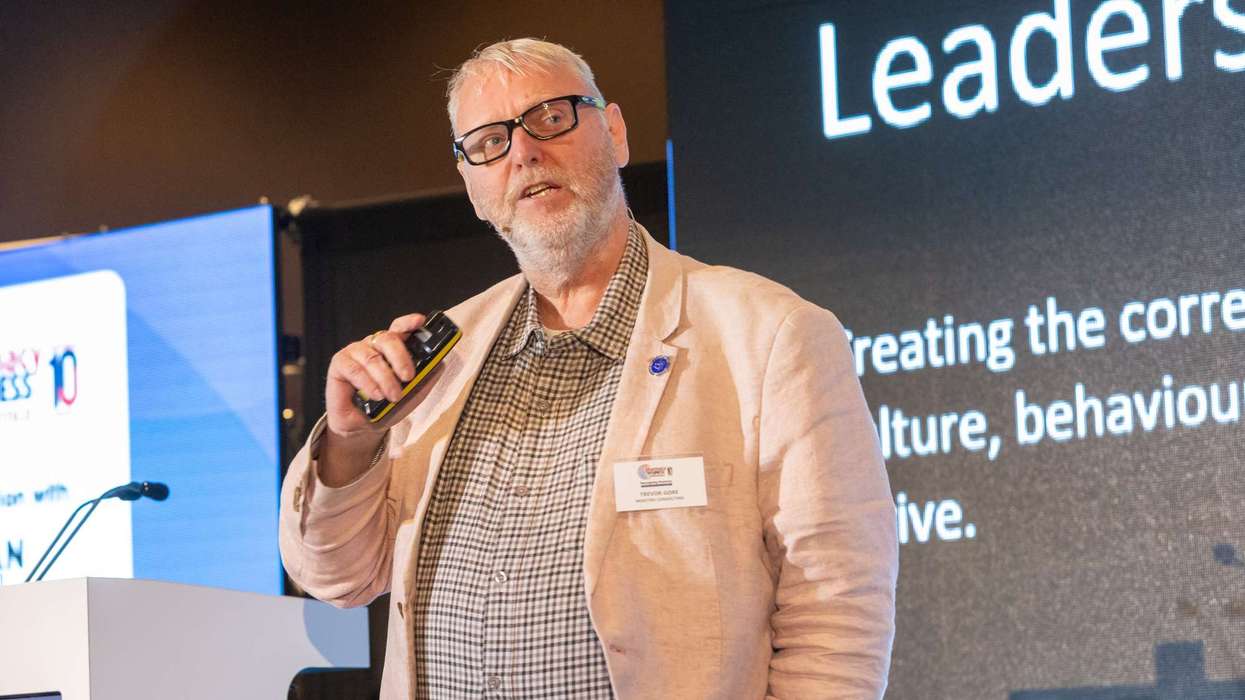
At an interactive table workshop on the importance of leadership in building the right culture for pharmacy teams at the Pharmacy Business Conference 2026, he narrated his personal experience of being invited by a pharmacy owner friend to assess his establishment’s performance.
Gore sat at the pharmacy for the whole morning and observed how things are done. During lunchtime his friend asked for his feedback.
“I said, they are doing absolutely nothing wrong. Everything you asked them to do, they are doing it perfectly. You have just asked them to do wrong things,” he said.
It was a problem of leadership, the owner was managing them to do things, but not leading them to do right things, he added.
“So the basic differences between leadership and management is the focus. It is the job of a leader to say, this is the plan, this is where we're going. It's the job of a manager to help them get there.”
He said the leadership works in times of challenge and change, while management works in safe predictable times.
Gore said it is often the poor leadership that ruin companies. To drive home the point, he quoted a Persian proverb, “A fish rots from the head,” and an organisation’s rot begins from poor leadership.
Drawing an example from concentric circles – the outer circle being ‘circle of concern’ and inner circle being ‘circle of control’, he said whatever in the outer circle is something that cannot be controlled, but the inner circle can be controlled.
He said the leaders should focus on what is under your influence and can be controlled.
He reminded that the pharma industry is severely underfunded, and unless it is a leadership body, there is nothing that can be done about it. So, stressing about that is out of the people’s control must be replaced with effective alternatives.
Although poorly funded, being nice, motivating, openly communicating, etc. will influence the team to do better as the team experiences a psychological safety from these factors.
He said no business can really work without psychological safety, and they work at four levels.
Inclusion safety: Everybody in an organisation should feel they have the right to be there.
Collaboration safety: Everybody should feel they have the right to work with other people.
Learner safety: Everybody should feel confident about making mistakes and learning from them.
Challenger safety: Everybody in an organisation should feel comfortable in saying that's nonsense, that won't work here, we've tried that before, but they don't.
“So, your greatest resource in your business is not your descriptions, it's not your stock, it's not your building, it is your people. Your people are your best resource,” Gore emphasised.
He urged the leaders to prioritise and invest in what they can control in the business. According to him, investing time in winning credibility of team members and public by improved leadership techniques is the key.
Gore emphasised on the necessity to be adaptable, collaborative, open to communication, at all levels within the organisation, which is inevitable for success as well as ensuring a healthy working environment.
Getting out of the outdated leadership style helps the team to identify their mistakes, challenge their potentials and generate greater outcomes.
“Leadership is not one style, it's adaptive. It's teaching people what to do. The pinnacle is collaborative leadership and that means team-huddled, shared decision-making.”
Gore concluded by saying, “If your team is not performing, look in the mirror and start from the top.”