







Key Summary
- NHS scanning trucks have detected 10,678 lung cancer patients.
- More than three quarters of the cases were caught at stages one or two.
- Lung cancer kills around 26,000 people every year.
NHS mobile screening units have detected lung cancer in 10,678 people, with more than three quarters of cases found at stages one or two.
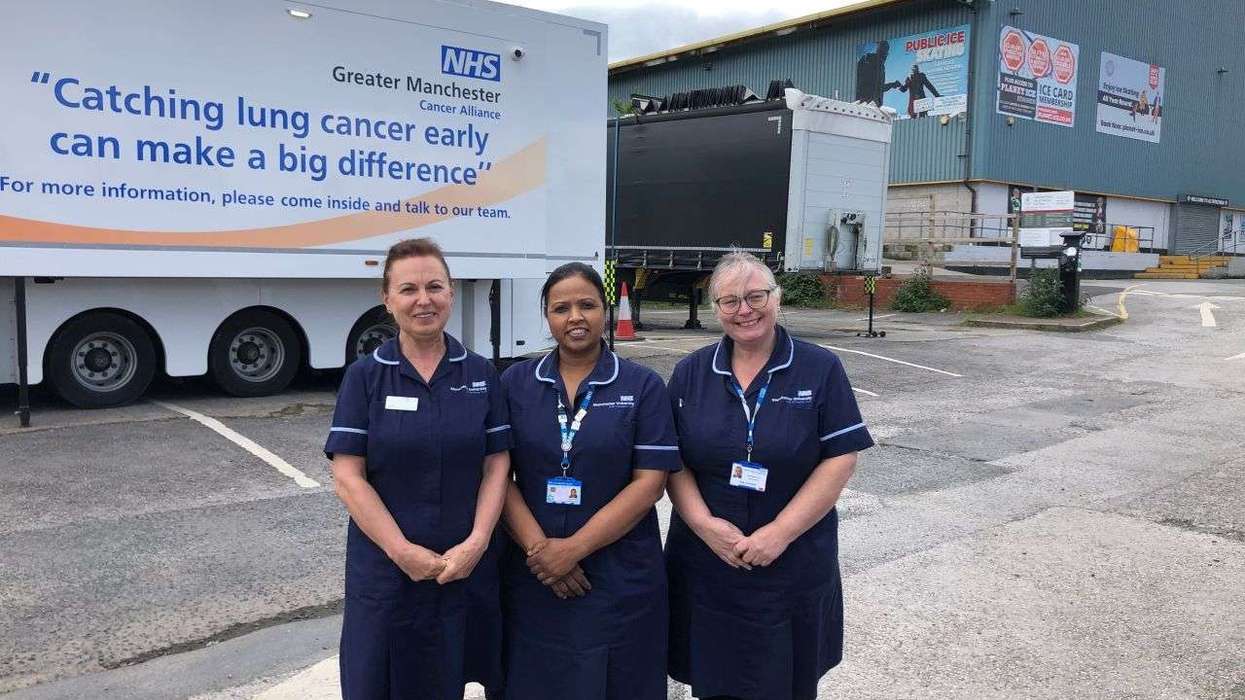
The NHS screening trucks, which operate in supermarket car parks, sports and busy high streets, are part of the NHS Lung Cancer Screening Programme.
Lung cancer causes around 26,000 deaths each year in England.
The screening programme, launched in 2019 in the areas most affected by the disease, has now reached half of England’s highest-risk population.
Since it began, more than 3.3 million people have been invited for a lung health check, and more than 800,000 have gone on to receive an LDCT scan.
People whose lung cancer is found at stage one or two are nearly 13 times more likely to survive for five years than those diagnosed later.
Data also show that more than a third of people diagnosed from the most deprived areas of England have been caught early since the programme began.
Professor Peter Johnson, NHS England’s National Clinical Director for Cancer, said the programme was designed to meet people where they are and make testing easier by bringing scanners into local communities.
The Government says the national rollout of lung screening by 2030 will lead to more than 6 million people being invited for a lung health check and could help diagnose up to 50,000 cancers.
Health Secretary James Murray said the National Cancer Plan aims for three in four people diagnosed from 2035 to be cancer-free or living well after five years, and urged people who receive an invitation to take part.