






Key Summary
- UKHSA shared report which showed that the new schedule is already helping to provide earlier protection for babies against meningitis B (MenB).
- In England, coverage of the second MenB dose in 6-month-old babies reached 89.8 per cent in April 2026.
- However, the Health Minister warned that vaccination rates for children are still low.
A UK Health Security Agency (UKHSA) provisional report for April vaccine coverage shows that the new schedule is providing early protection for babies against meningitis B (MenB).
The report, published on Thursday (25), included a select number of childhood vaccines and provided early indications of the impact of the recent changes to the vaccination schedule.
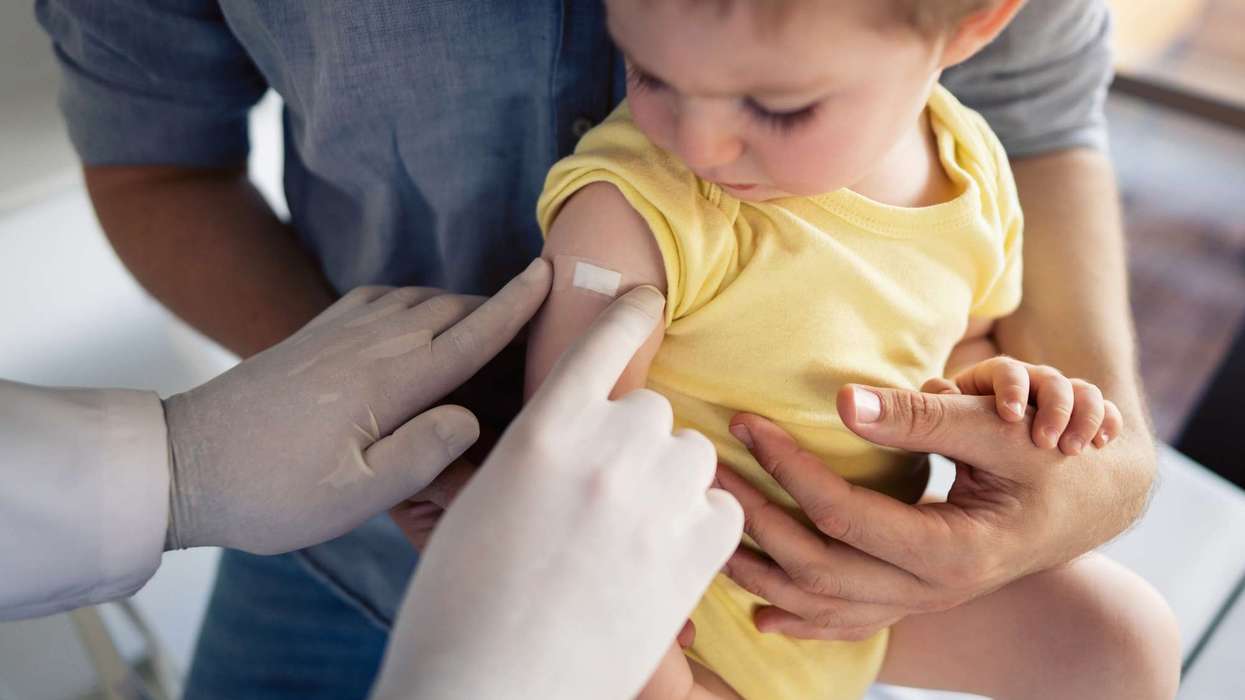
Provisional figures show that in England, coverage of the second MenB dose in 6-month-old babies reached 89.8 percent in April 2026, a 4.6 percentage point increase compared to April 2025.
This follows JCVI advice to move the second MenB dose from 16 weeks to 12 weeks of age from June 2025.
This adjustment was part of a broader series of changes to the childhood immunisation schedule. It included a new 18-month appointment introduced on 1 January this year to offer the second dose of the MMR vaccine earlier, alongside a switch from MMR to MMRV.
This offers children protection against chickenpox in addition to measles, mumps, and rubella.
Provisional data for April shows that 77.7 per cent (35,366 out of 45,488) of eligible 15-month-olds - those who turned 12 months in January and reached 15 months in April — received their first dose of the MMRV vaccine, providing early evidence that uptake has been sustained following the switch to the new schedule.
However, significant variation persists across England, with MMR/MMRV first dose coverage for April ranging from 72 per cent in London to 83 per cent in the South West.
Reassuringly, many children do catch up over time, with MMR first dose coverage increasing to 92.6 percent in those aged five.
Measles cases
The urgency of improving MMR/MMRV coverage is underlined by the latest measles surveillance data.
A further 65 laboratory-confirmed measles cases have been reported in England since the last update two weeks ago, bringing the total number of confirmed cases between 1 January and 22 June 2026 to 801, compared to 959 cases for the whole of 2025.
The majority (482 out of 801, 60 per cent) of these cases were in children aged below 10 years. In the most recent four weeks, London accounted for the highest proportion of cases (49 per cent). Tragically, 2 children in England have died from measles in 2026.
Dr Gayatri Amirthalingam, Deputy Director of Immunisation at the UK Health Security Agency, said: “Childhood vaccines save lives. They are highly effective, free on the NHS and every dose matters. Vaccines not only provide protection for the individual child but can also protect the wider community.”
However, she added that there are still consequences of sub-optimal MMR/V vaccine uptake. She warned about the rise in measles cases too.
While Health Minister Sharon Hodgson said that the vast majority of babies receiving their second MenB dose on time is encouraging, she added: “Vaccination rates for children are still too low. These vaccines are safe, effective and protect against serious illness. I’d strongly urge all parents to take up the offer when it comes and to check their children’s record to ensure no vaccinations are missing.
NHS England has confirmed that the 2026/27 national vaccines and immunisations catch-up campaign will focus on MMR/V vaccination. The focus is due to recent measles outbreaks and the removal by WHO of England’s measles elimination status.
Community pharmacies will begin their one-off Meningococcal B (MenB) vaccination service from July 20 to ensure that students are vaccinated before the start of the 2026/2027 academic year.